Strategy
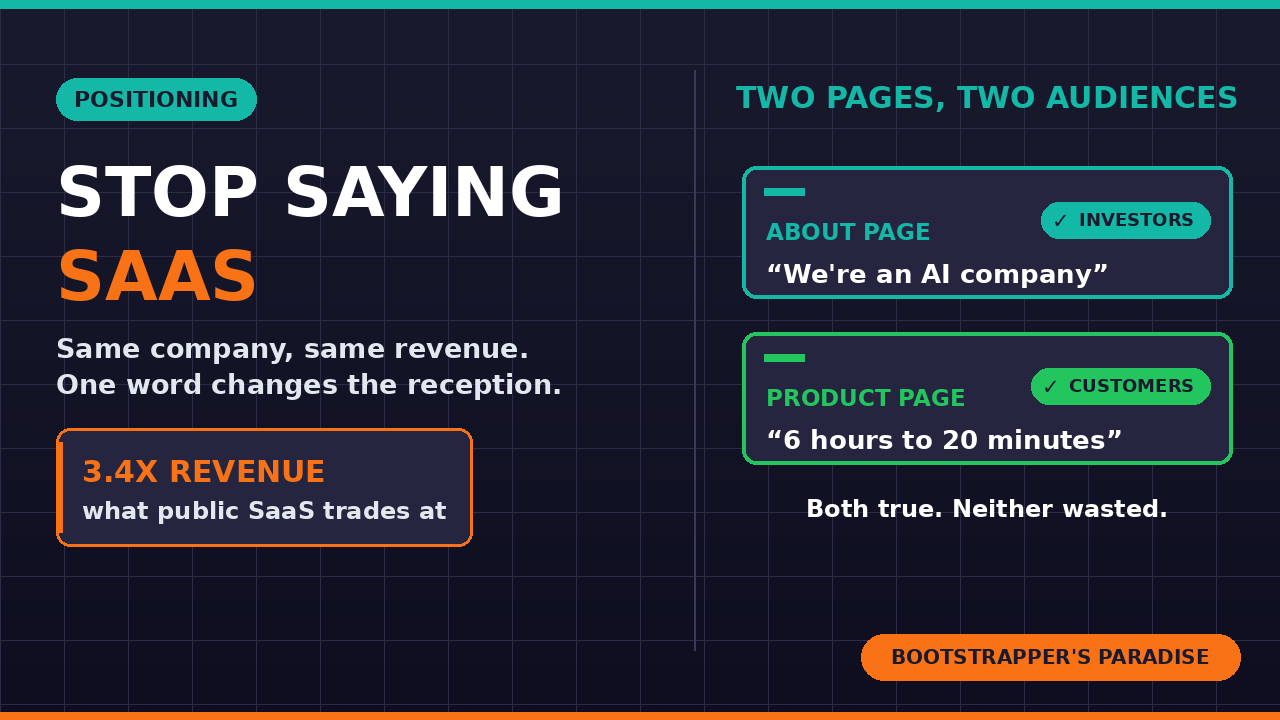
When And Why To Brand As An AI Company Instead Of SaaS
The AI label can open doors with investors and acquirers, but customers buy outcomes. Learn how to position your company honestly for both audiences.
Oct 12, 202610 min read
Insights, tutorials, and stories about building SaaS products, bootstrapping, and the indie hacker journey.
The AI label can open doors with investors and acquirers, but customers buy outcomes. Learn how to position your company honestly for both audiences.
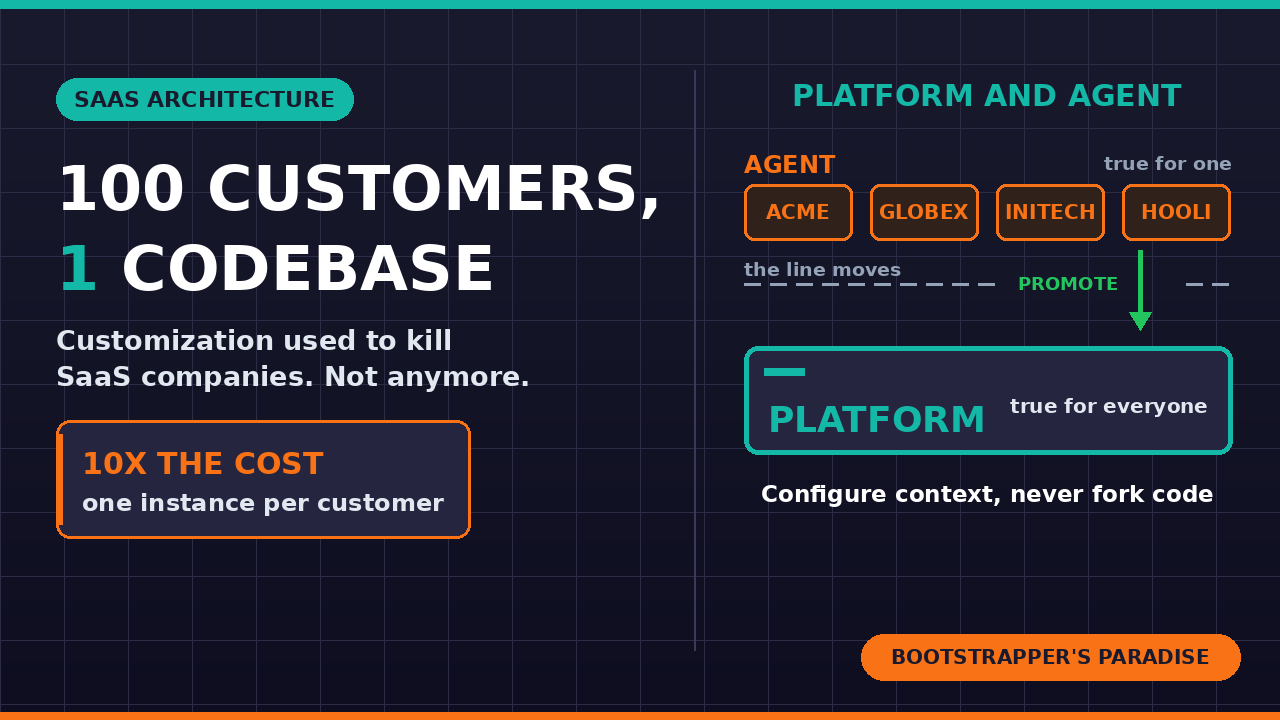
Use a platform-and-agent split to deliver customer-specific customization without forking your product, then promote patterns into the shared platform.
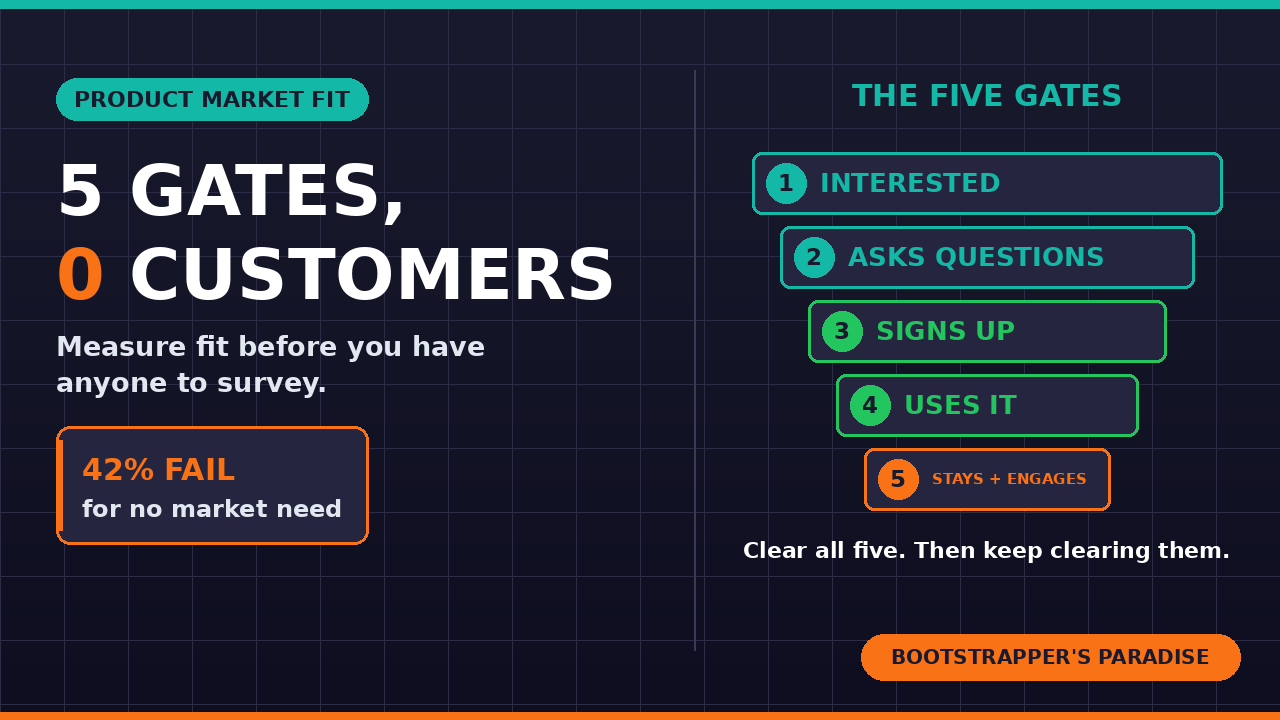
Product-market fit is not a milestone. It is a threshold to maintain. Use five observable gates to measure it from your first customer conversation.
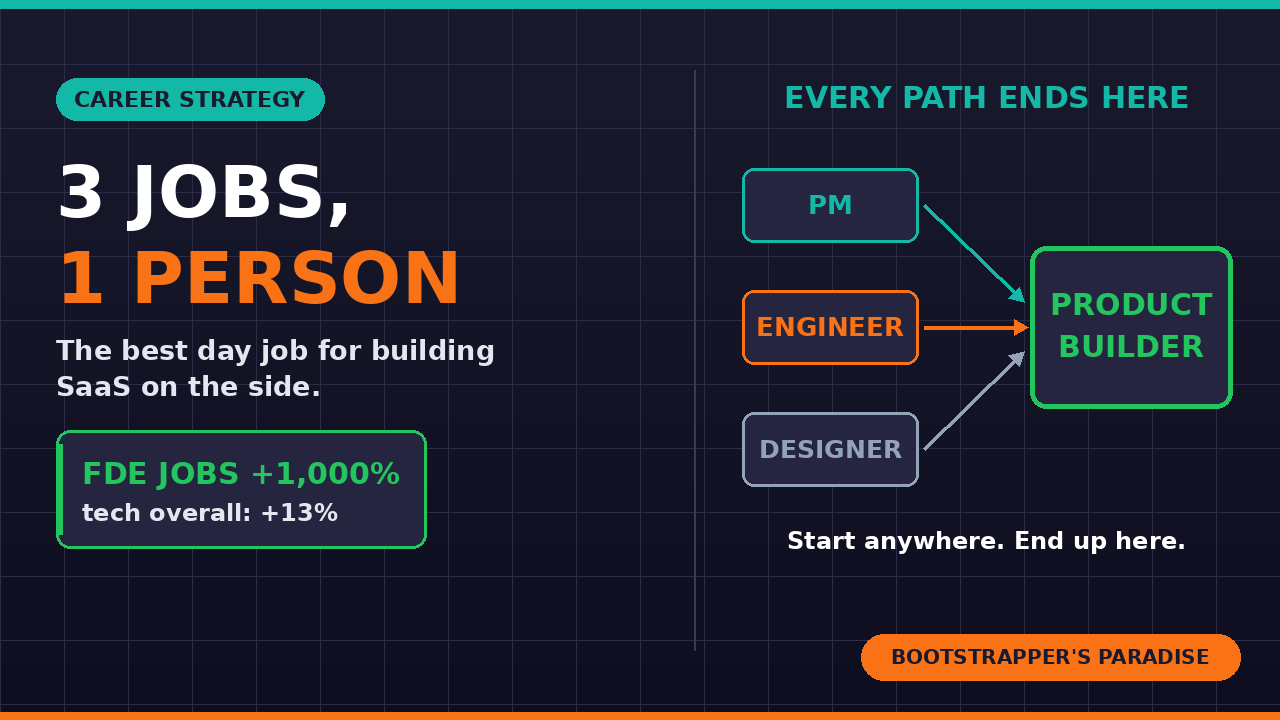
The strongest day job for building SaaS on the side combines product judgment with engineering and design. Here is the path from specialist to Product Builder.
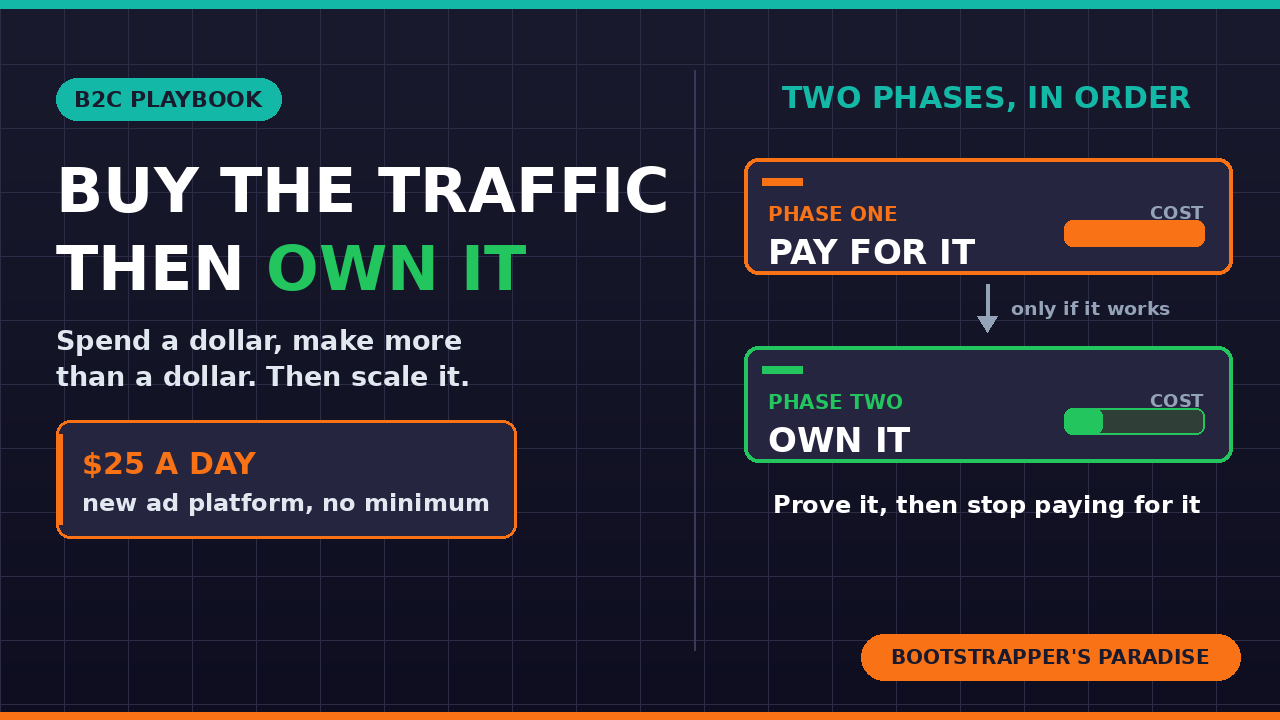
A practical B2C SaaS playbook: validate demand with ads, track unit economics, then replace paid traffic with branded, transactional, and AI-cited organic discovery.
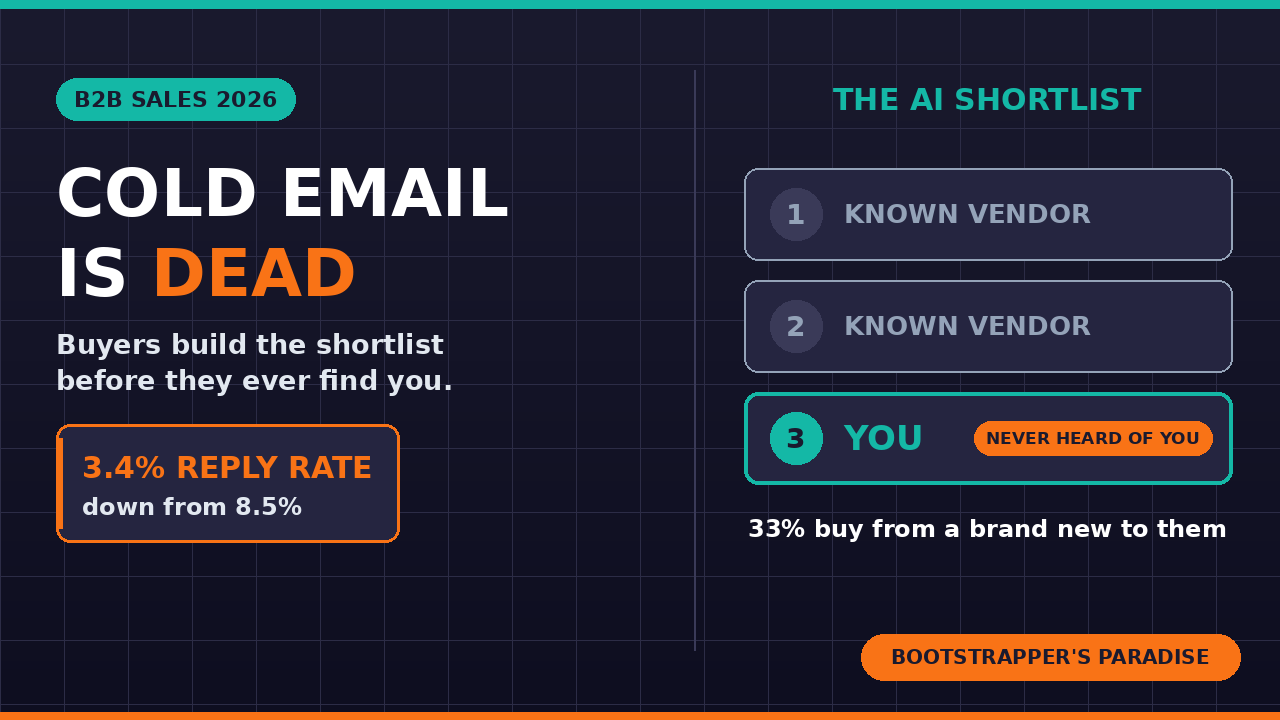
Cold email is dying. Learn the 2026 B2B SaaS sales playbook: split your motion by company size, build relationships, and earn a place on the AI shortlist.
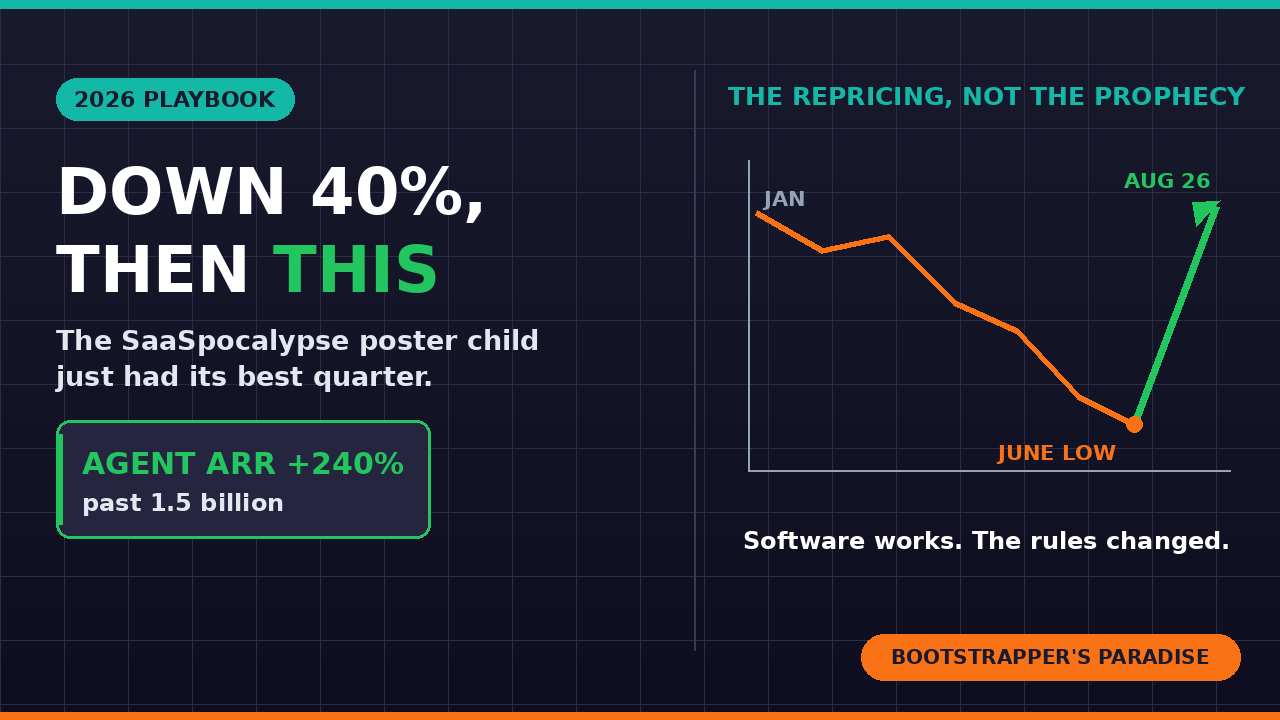
The SaaSpocalypse was a repricing, not a prophecy. Learn the 2026 SaaS playbook: go vertical, put AI in your product, and open it to agents.
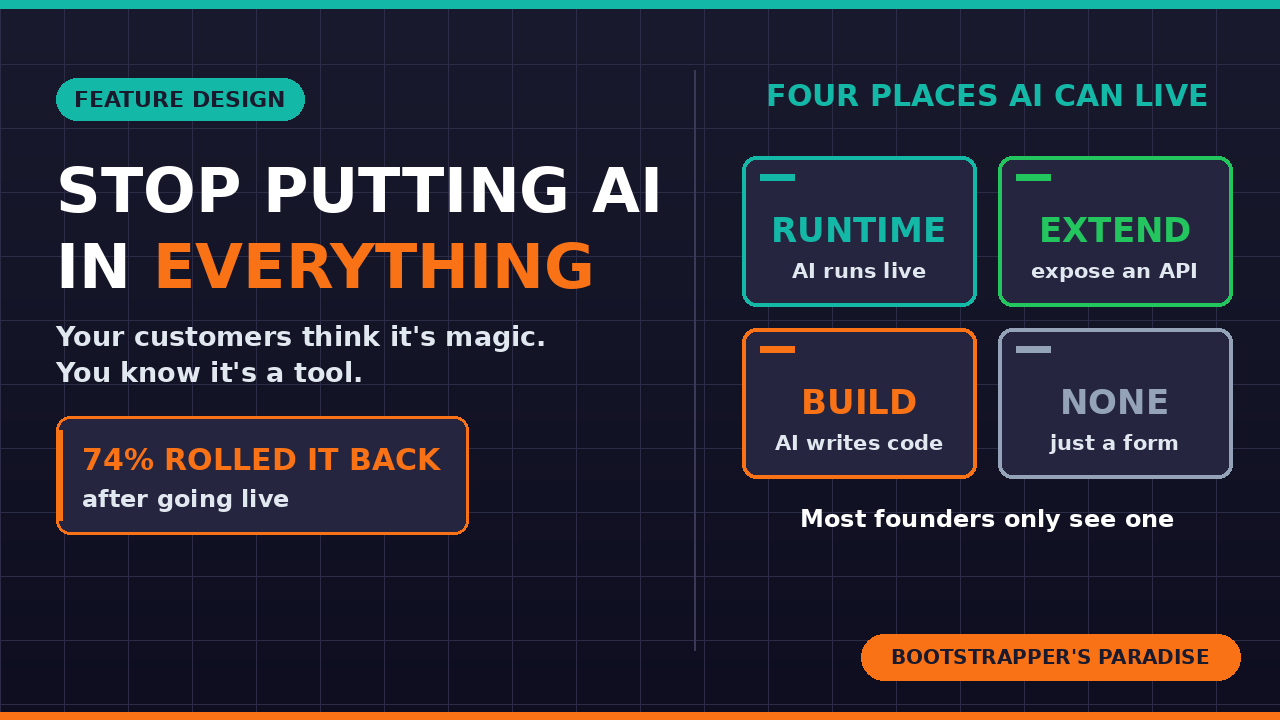
AI is a tool, not magic. Use this five-question test to decide when runtime AI, an extension layer, build-time AI, or no AI is the right product choice.
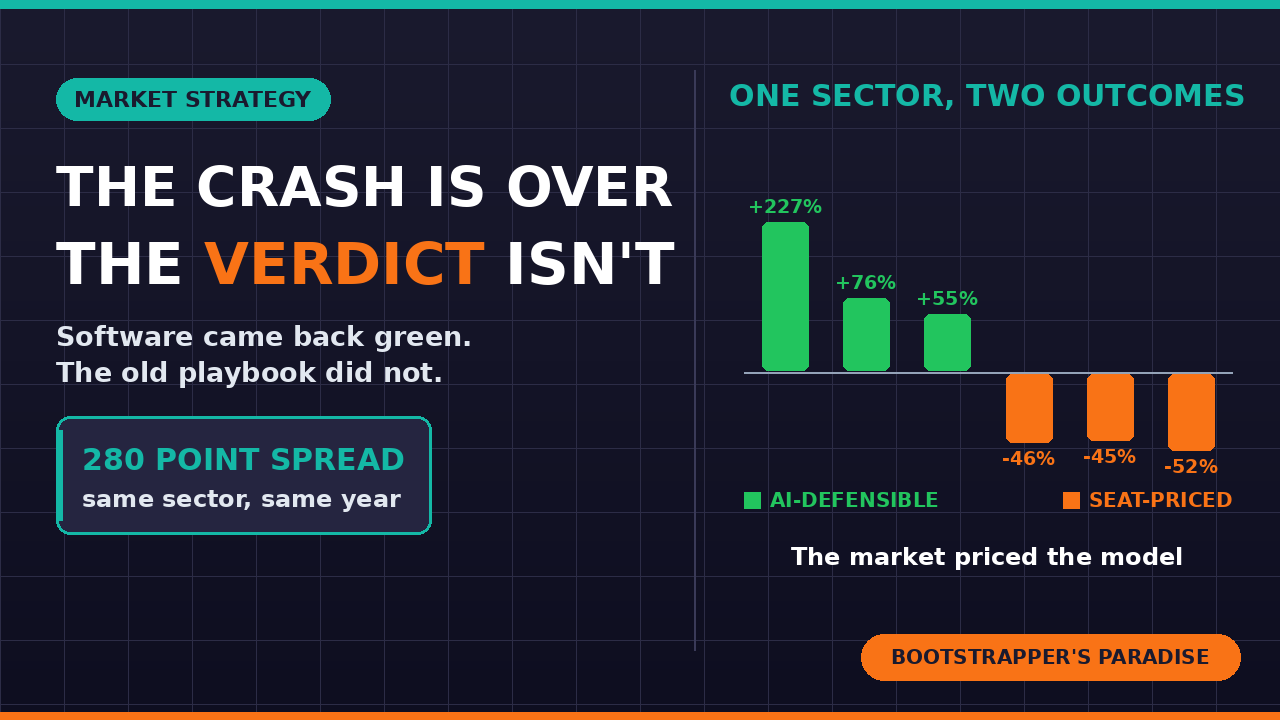
Six months after AI agents triggered a trillion-dollar software selloff, the index is green again and private equity is circling. But look one level down and it's not a recovery — it's a bifurcation. The crash is over. The verdict isn't.
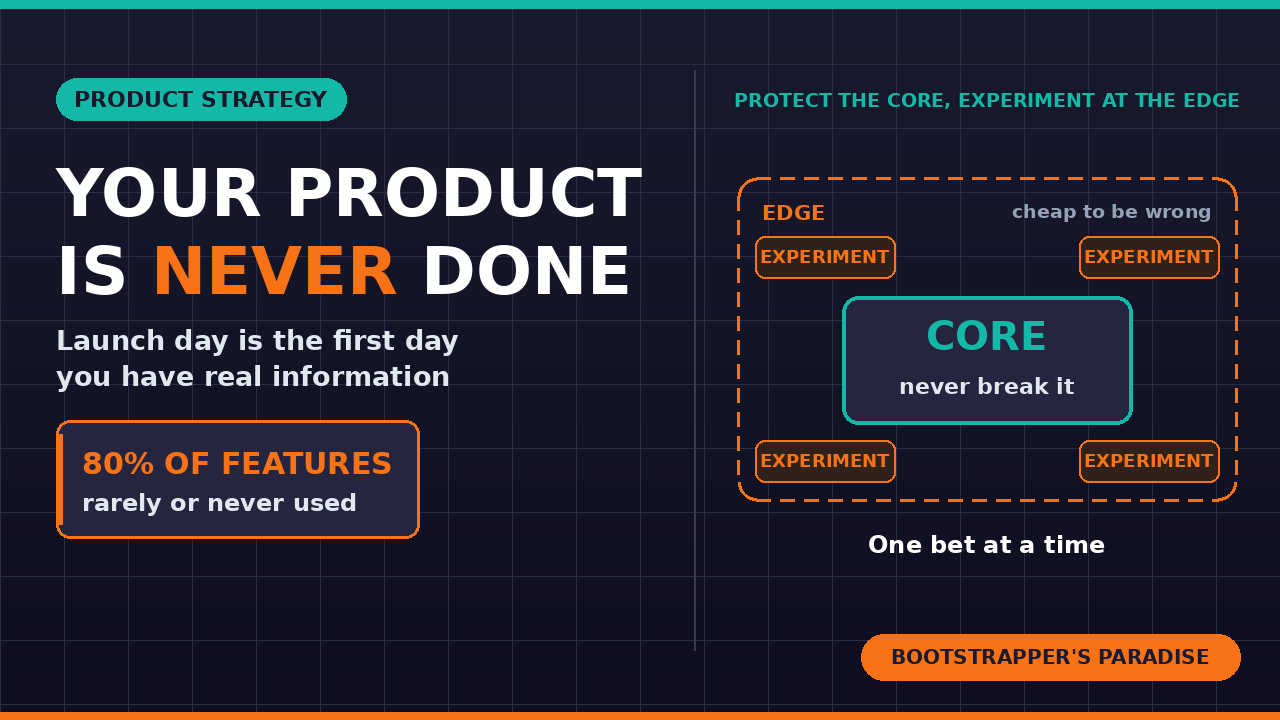
Launch day is the first day you have real information. Learn how to protect your core, experiment at the edge, and keep building from evidence.
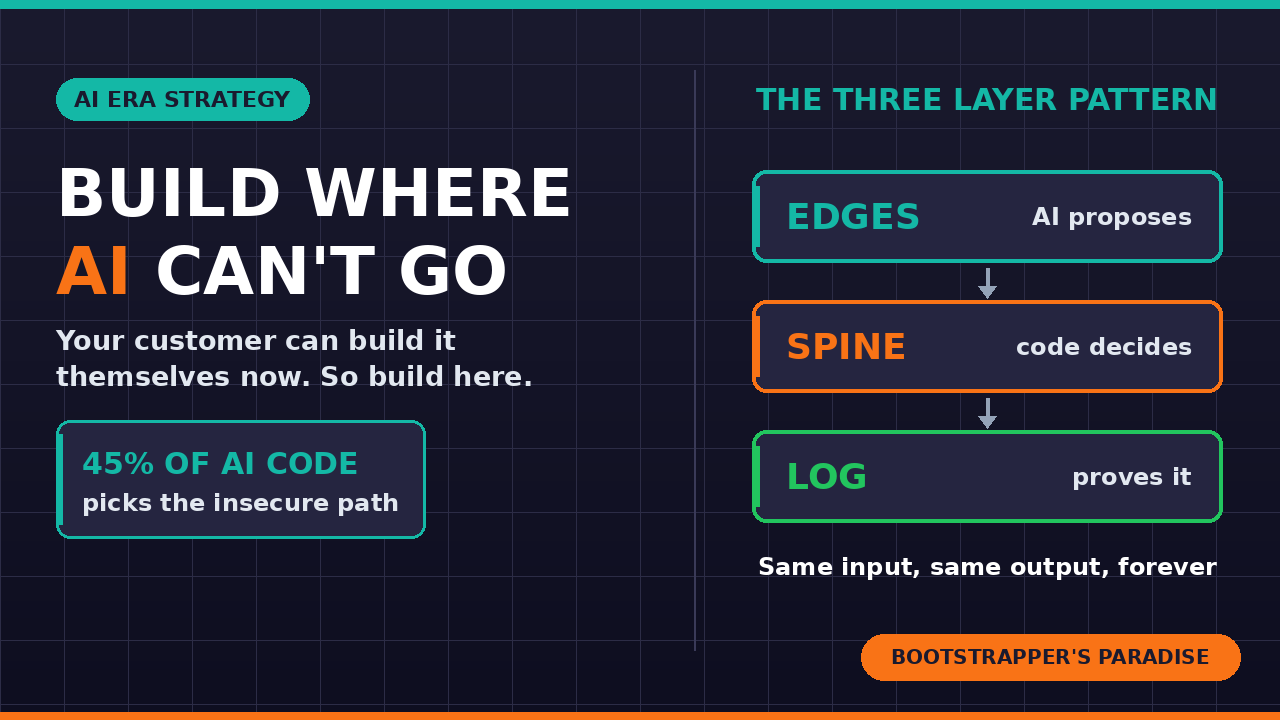
Anyone can build software with AI now. The opportunity is in the deterministic, auditable systems AI cannot reliably replace.
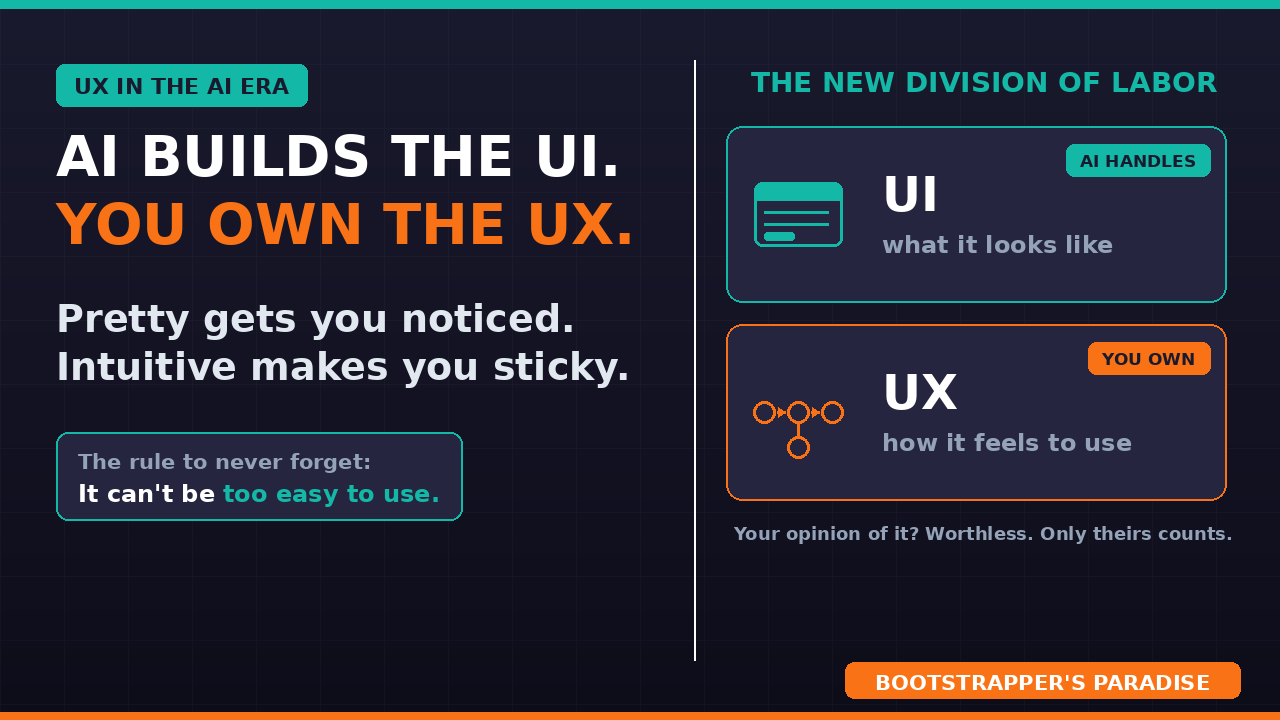
AI can make your software beautiful, but you still own the experience. Pretty gets users noticed; intuitive keeps them coming back.
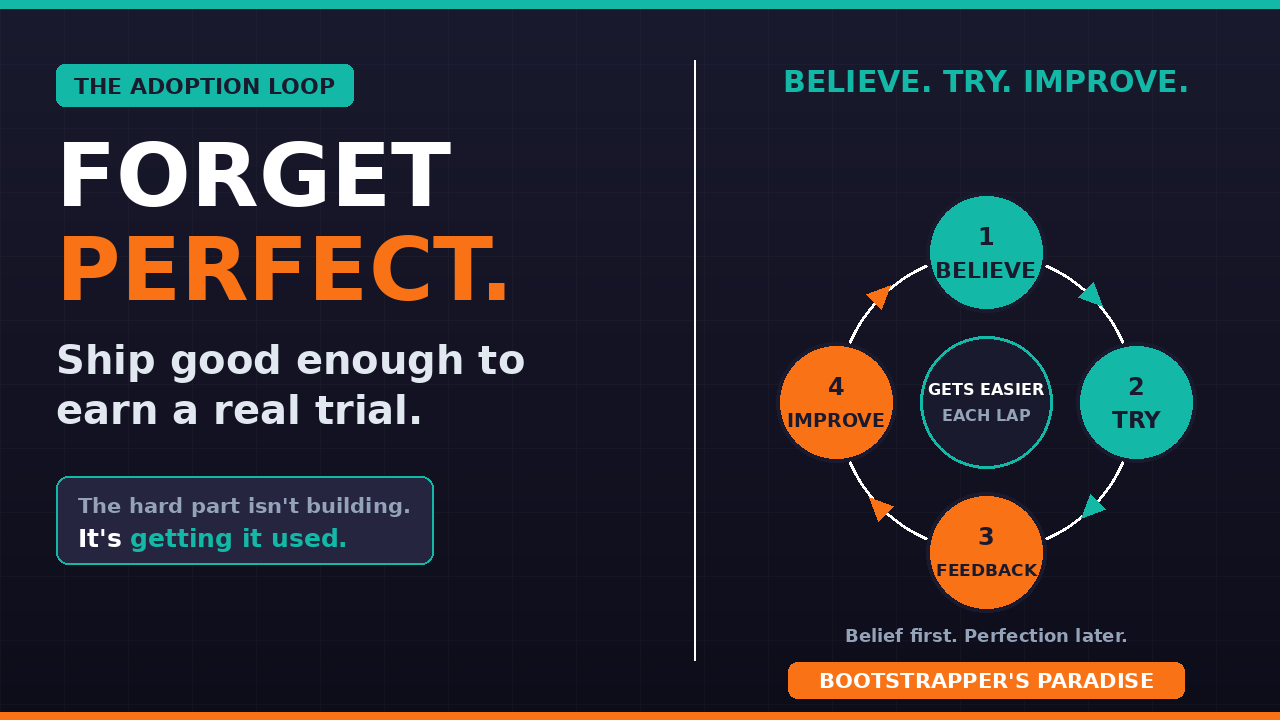
Forget perfect. Build software good enough to earn a real trial, get real feedback, and improve from actual usage instead of guessing.
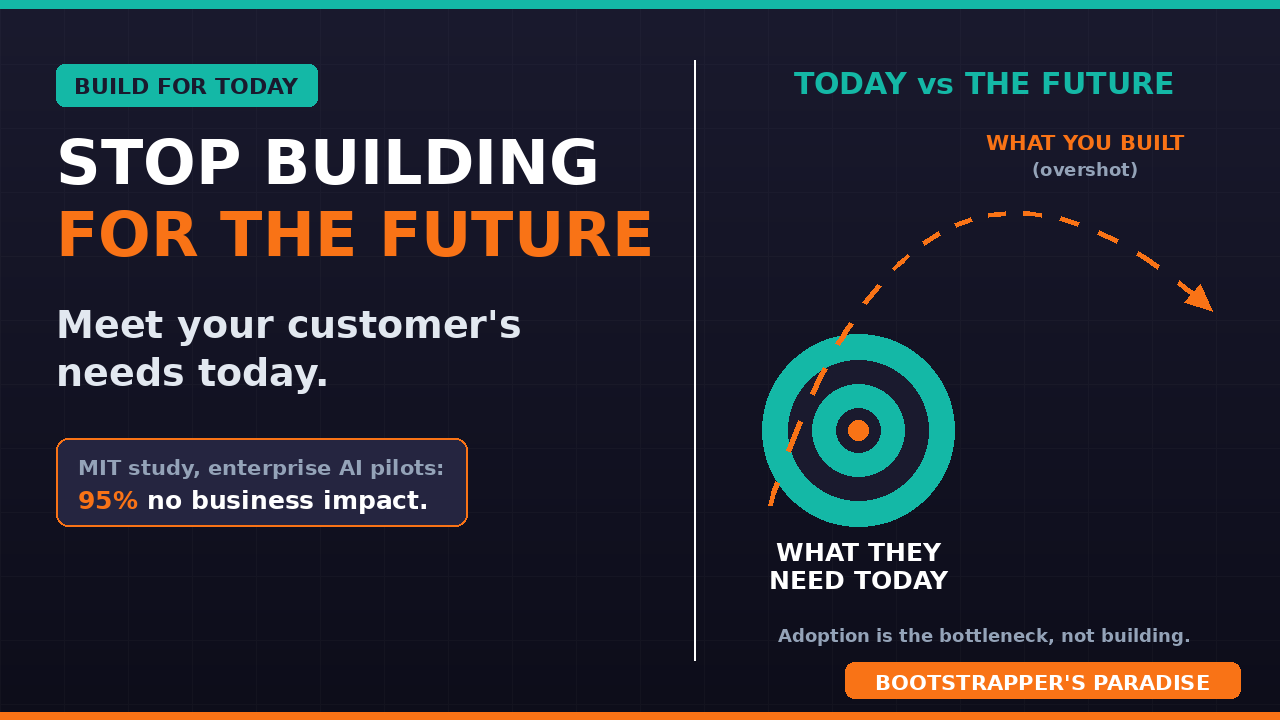
Build for what your customer needs today, not the future you imagine for them. Adoption is the bottleneck, so start with the smallest useful improvement.
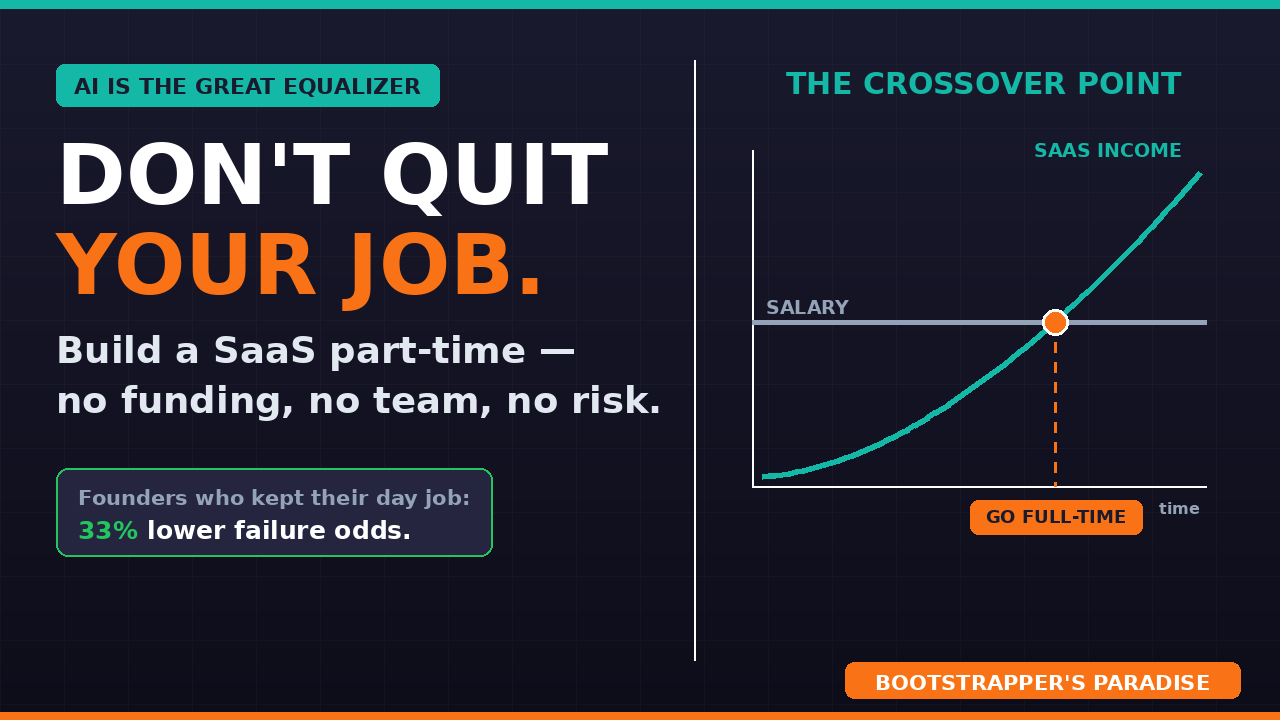
AI lets solo founders keep their paycheck, build SaaS part-time, and go full-time only after the business out-earns their salary.
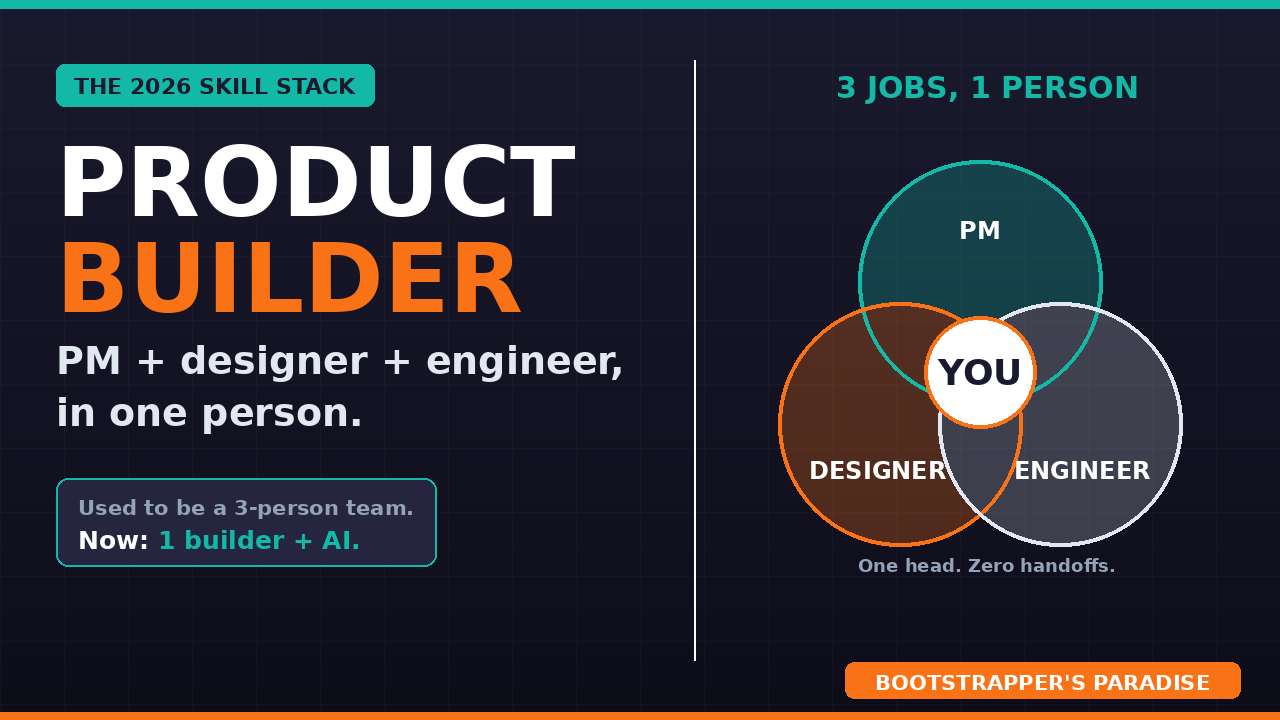
AI collapsed the old three-person SaaS team into one Product Builder: a founder who can think like a PM, design the experience, and ship the product.
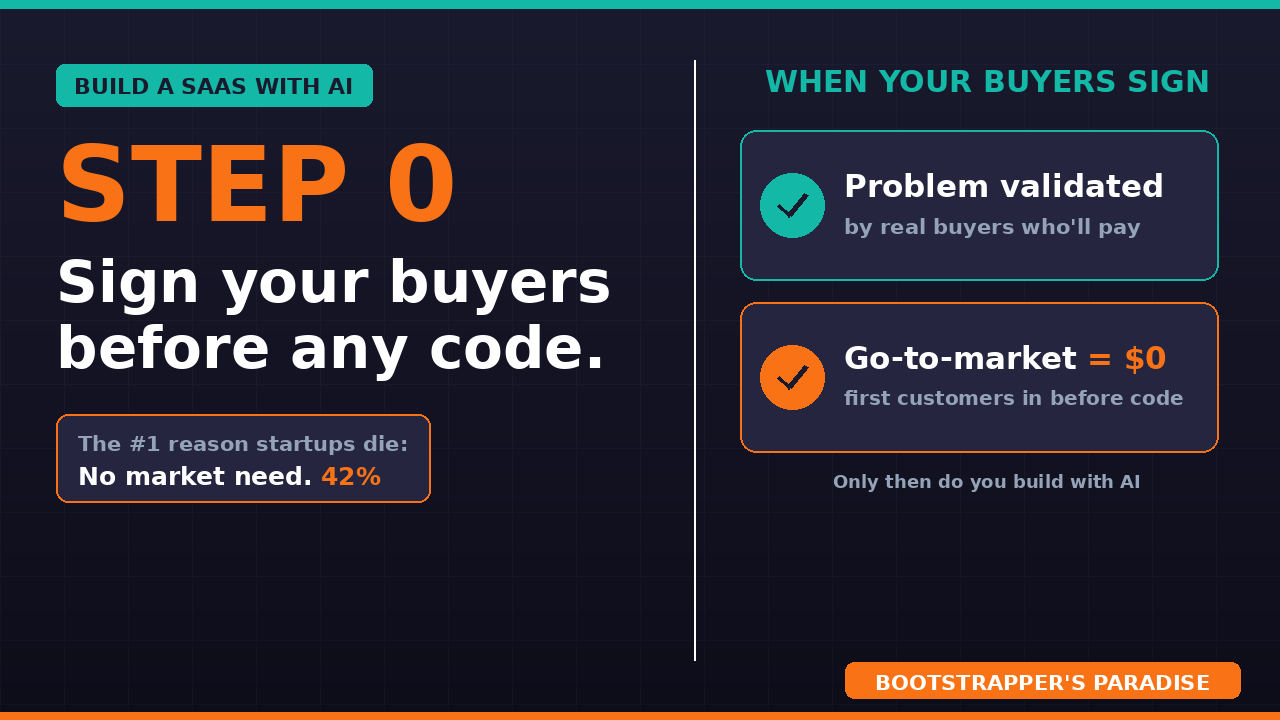
Building with AI is cheap now. The founders who win validate the problem and sign real buyers before they write a single line of code.
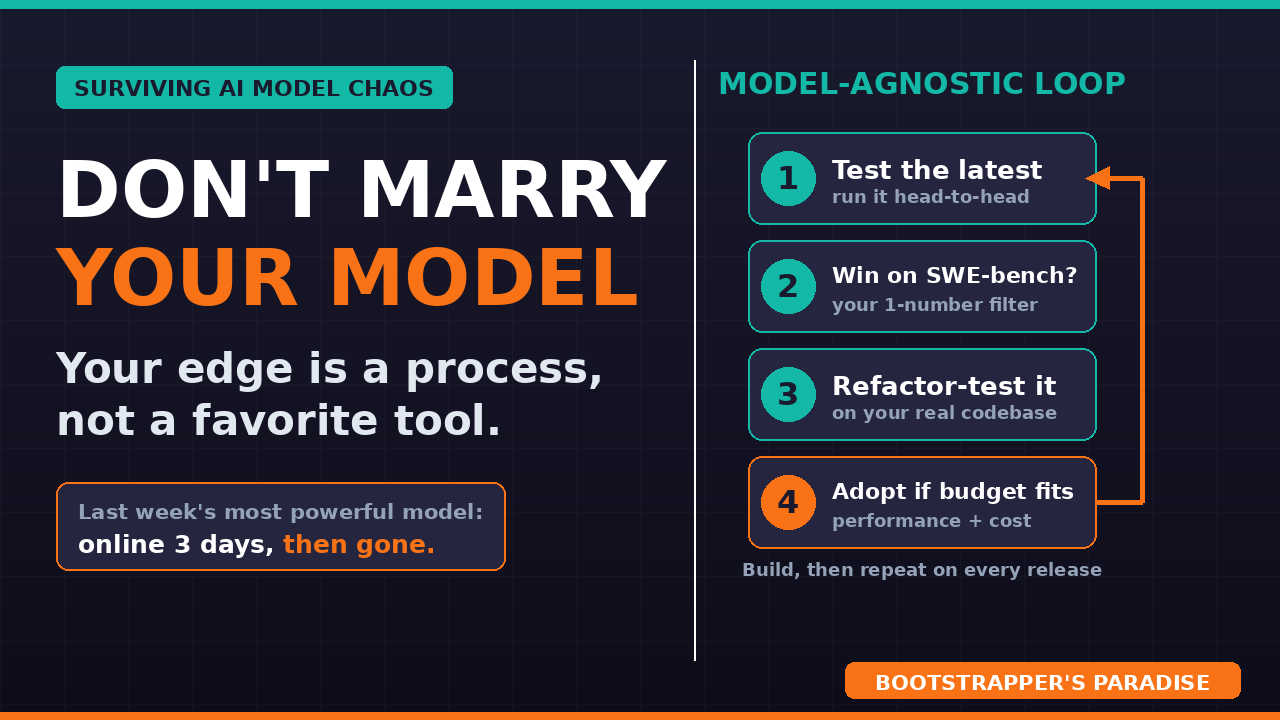
AI models keep changing, disappearing, and getting more expensive. Your edge as a SaaS bootstrapper is a repeatable process, not a favorite tool.
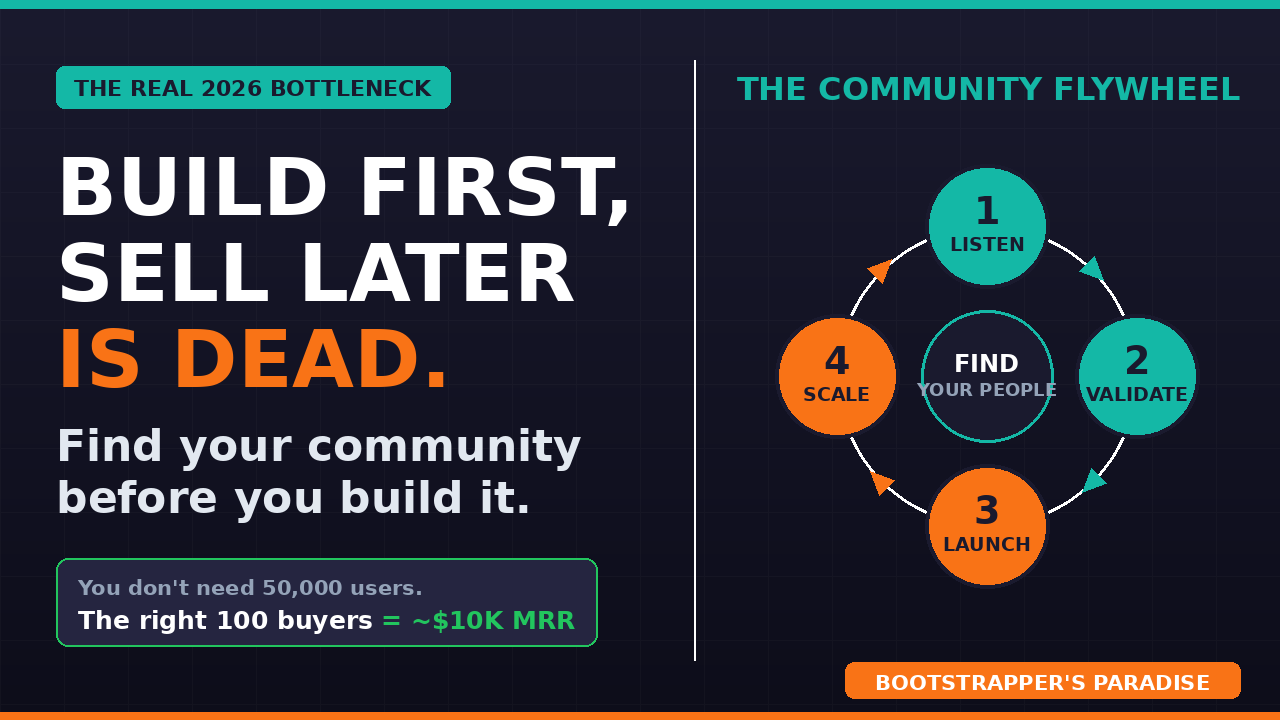
The fastest way to solve the 2026 SaaS bottleneck is to find where your target buyers already gather, listen first, and build from real community demand.
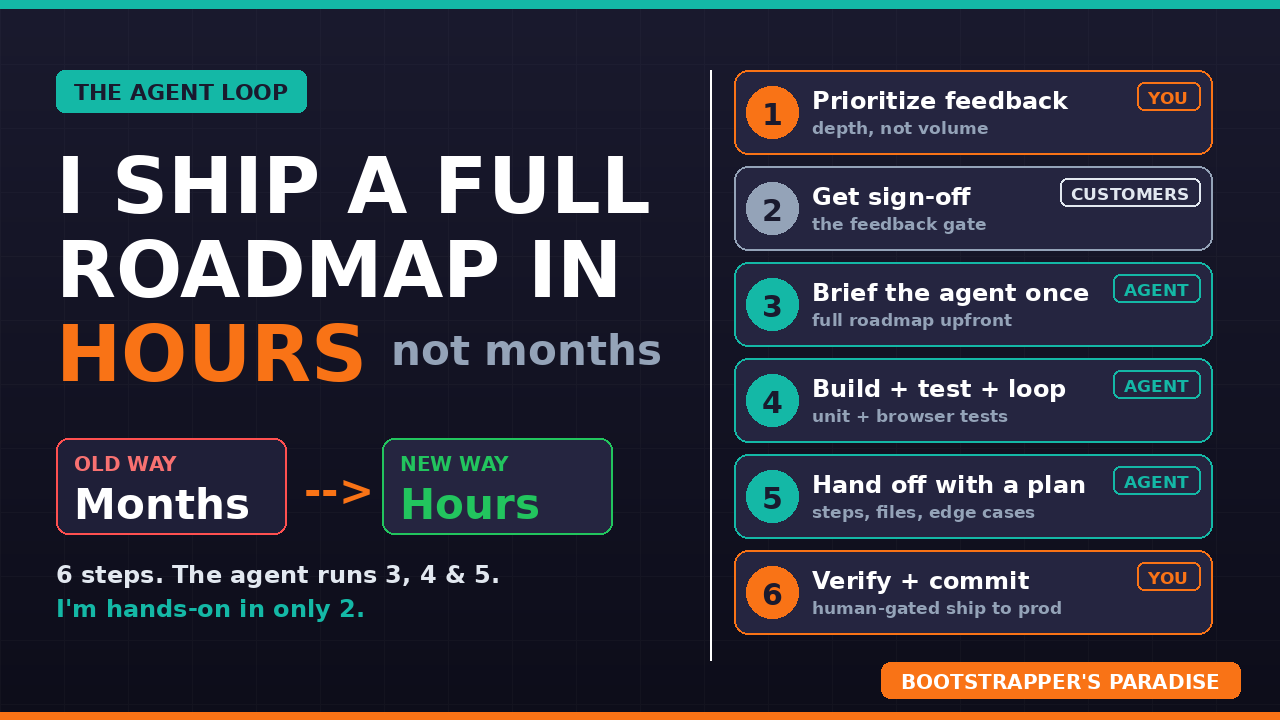
The exact customer feedback loop I use to turn advisor and customer input into shipped, tested roadmap items with an agent doing the middle work.
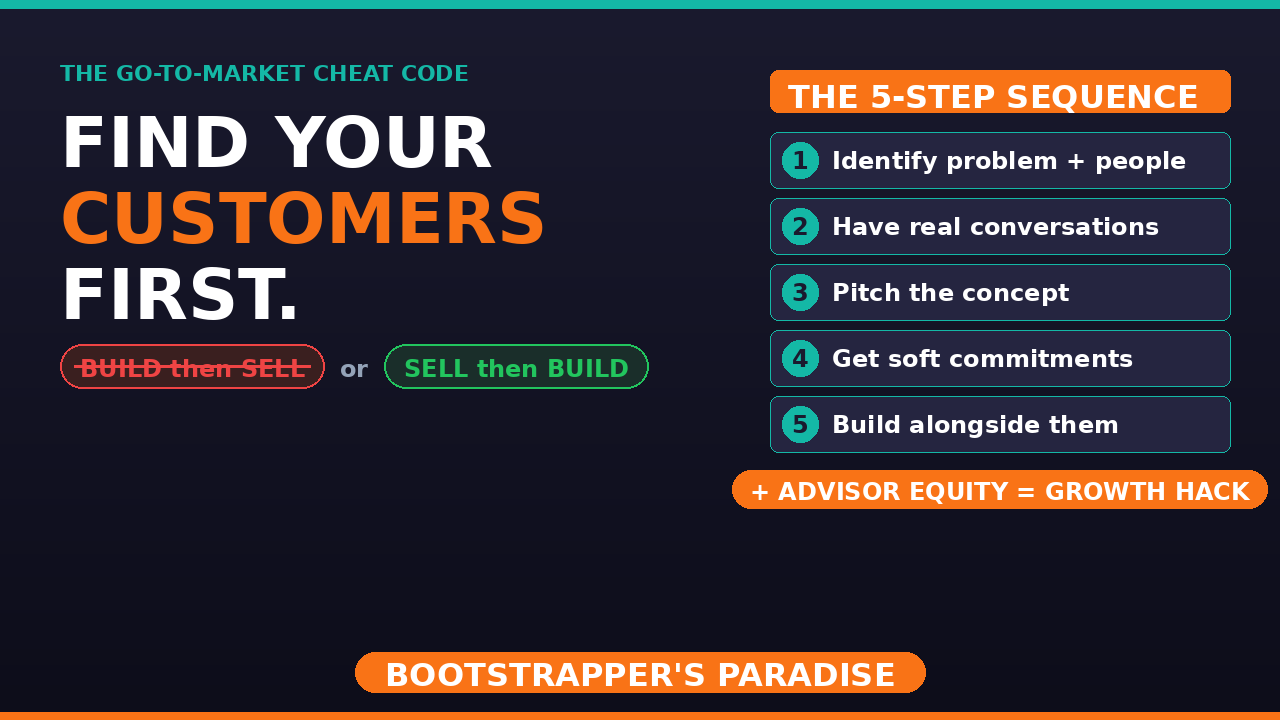
Find your customers first, build around what they actually need, and turn your earliest buyers into advisors who help you grow.
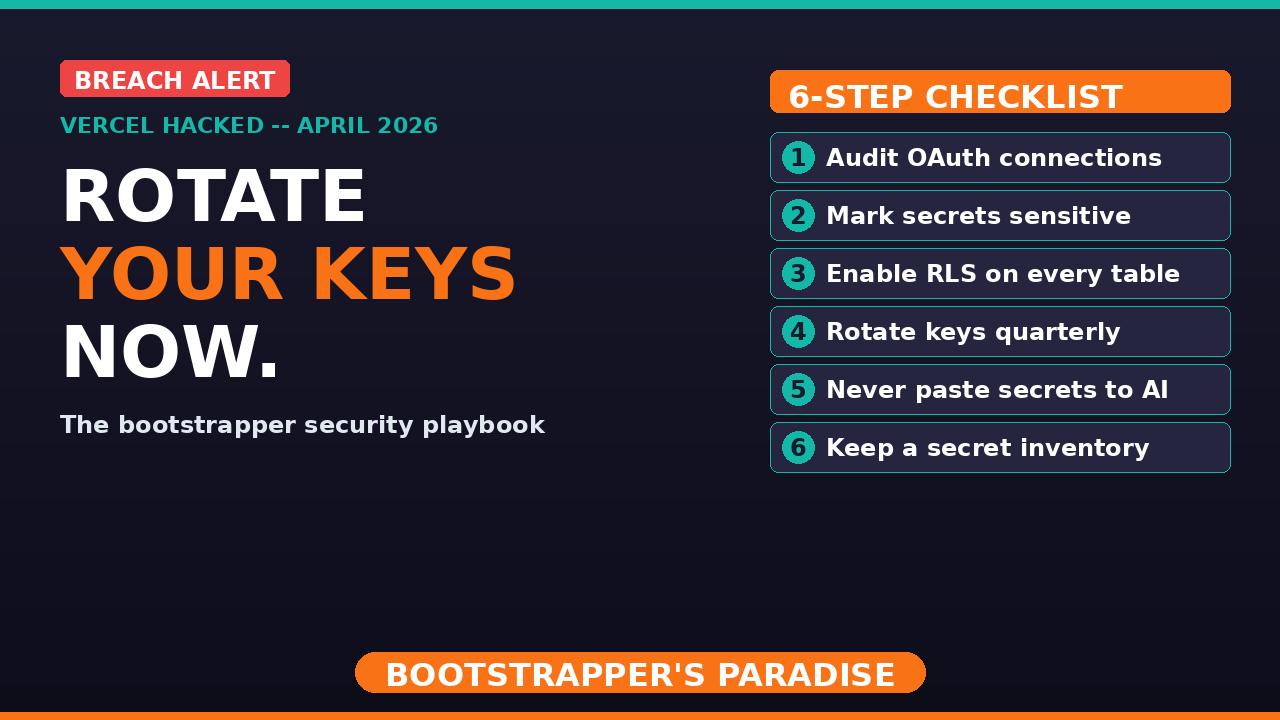
Vercel's April 2026 breach is a reminder for bootstrappers to audit OAuth access, mark secrets sensitive, rotate keys, and build real defense in depth.
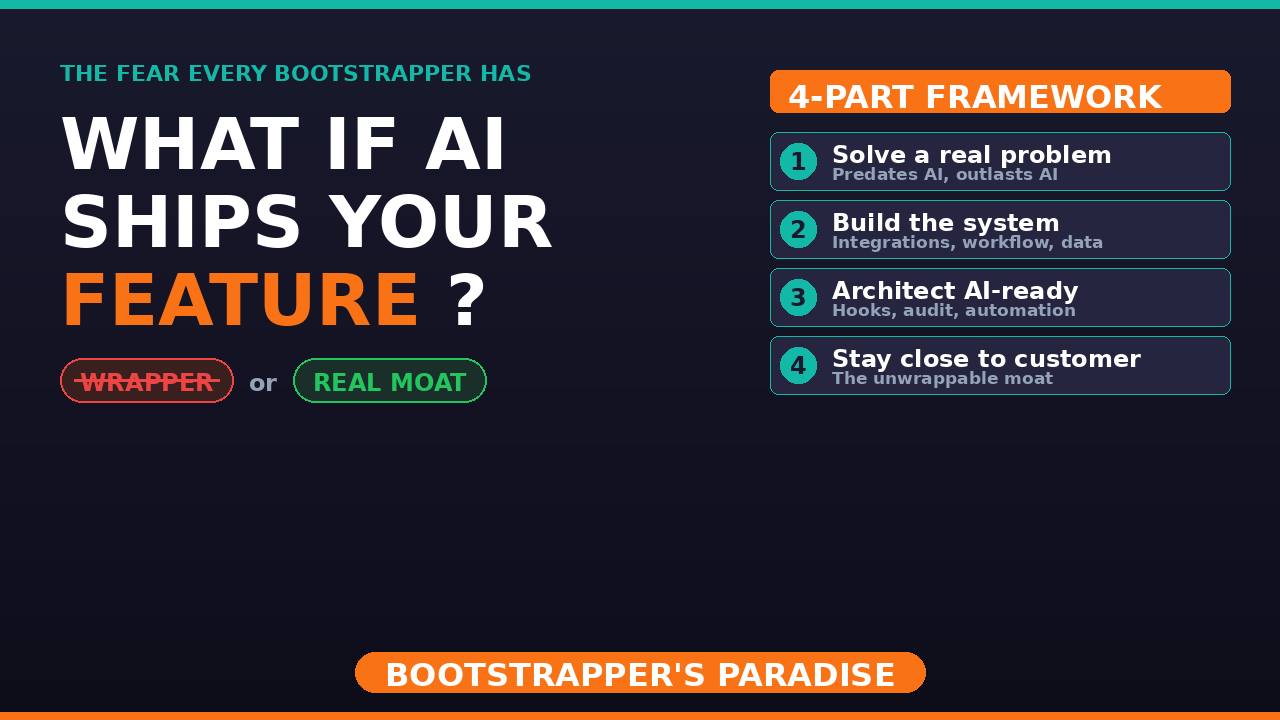
A practical framework for SaaS bootstrappers to build real moats, avoid thin AI wrappers, and turn fast-moving AI advances into an advantage.
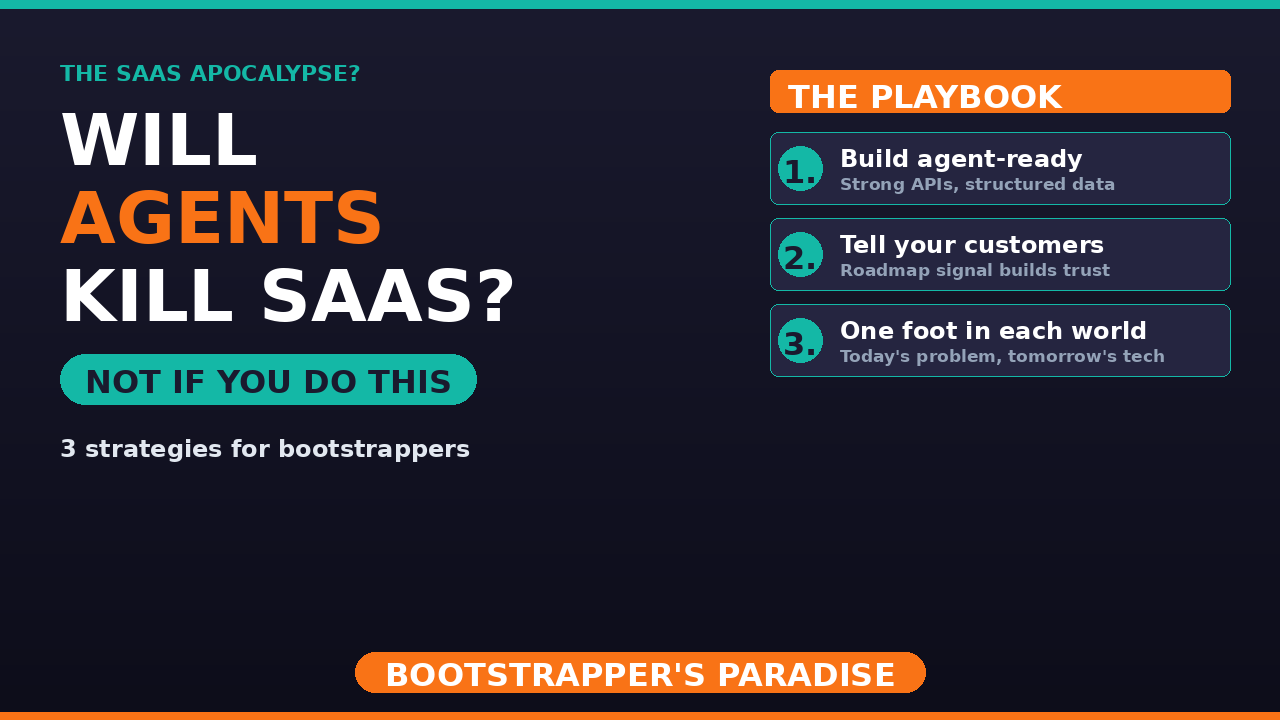
AI agents are changing how software gets bought and used. Here are three practical ways SaaS founders can make their products agent-ready without abandoning today's customers.
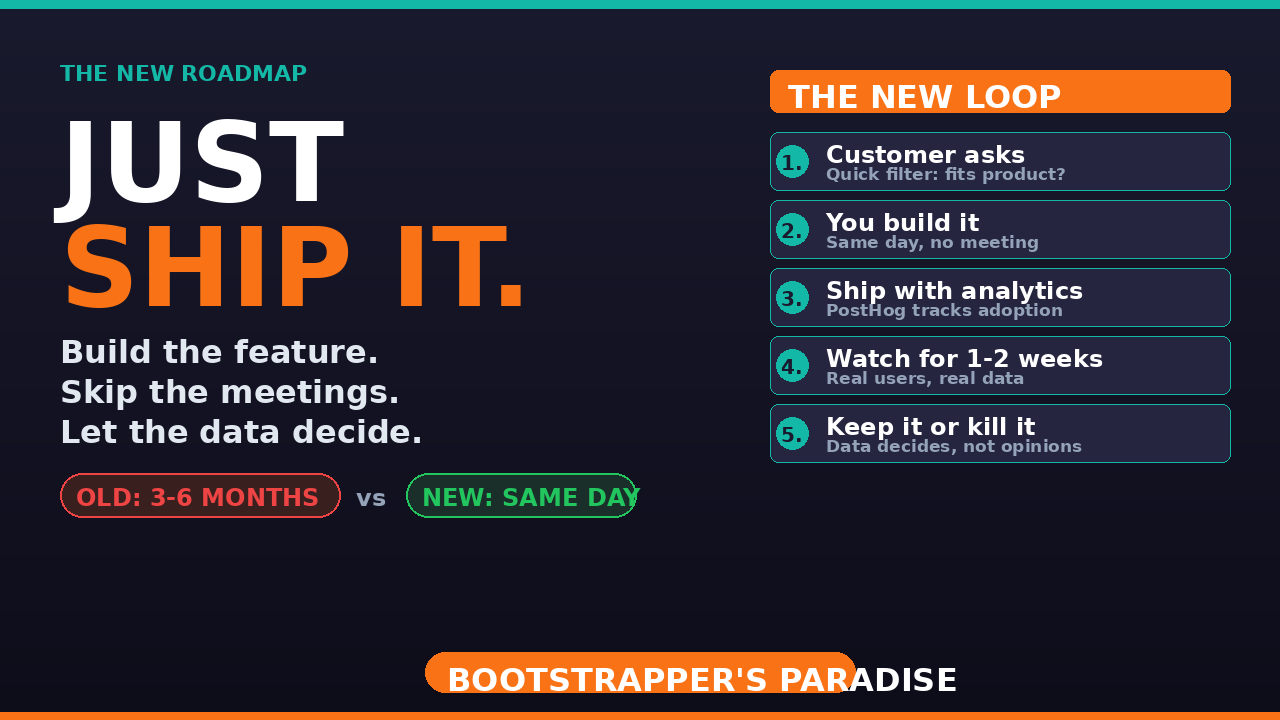
AI has collapsed the cost of building. For bootstrapped SaaS founders, the fastest roadmap is to build, ship, measure, and let real usage decide.
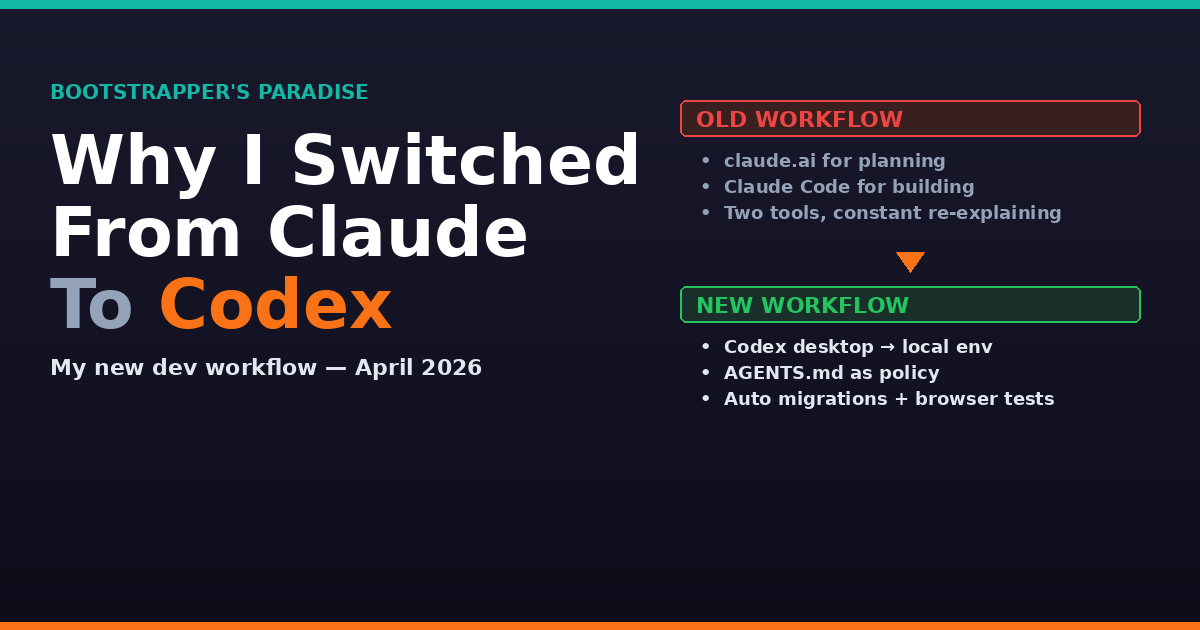
Why I replaced my Claude-based workflow with Codex: one agent for planning and building, AGENTS.md guardrails, automated dev migrations, and Playwright browser testing.
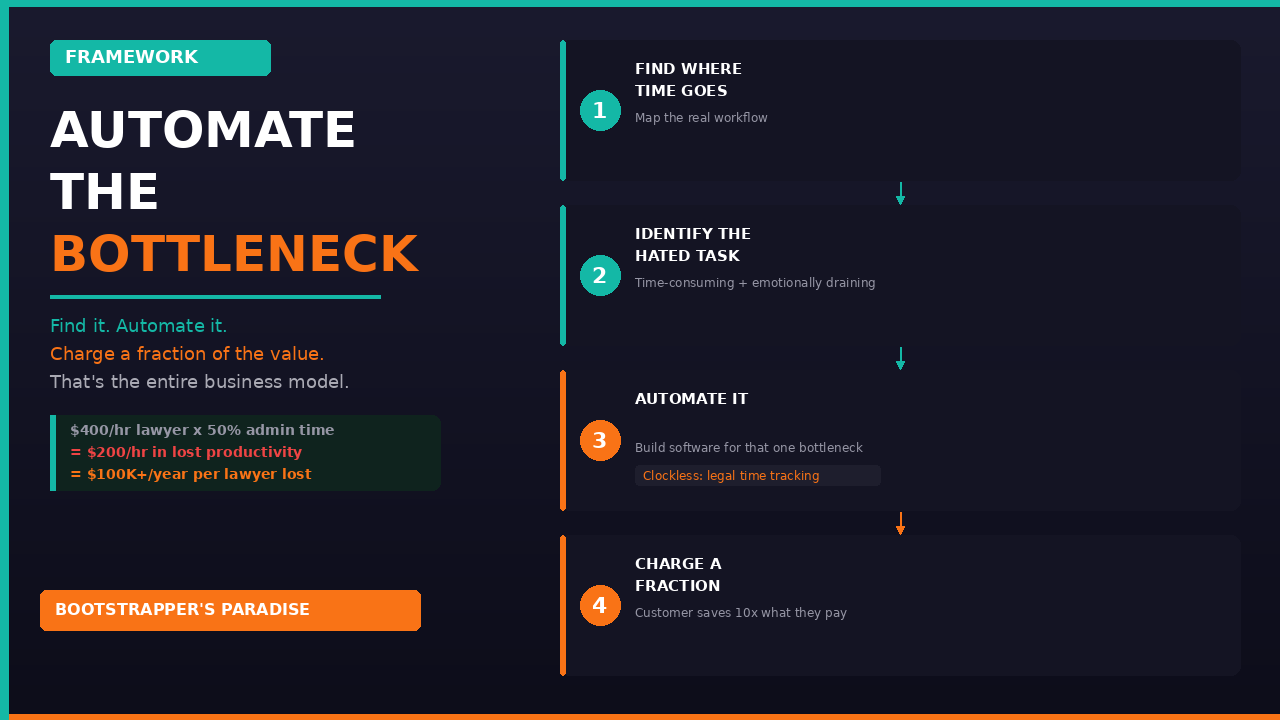
Every business has a bottleneck. Find it. Automate it. Charge a fraction of the value. That is the simplest, most repeatable formula for building a profitable SaaS product.
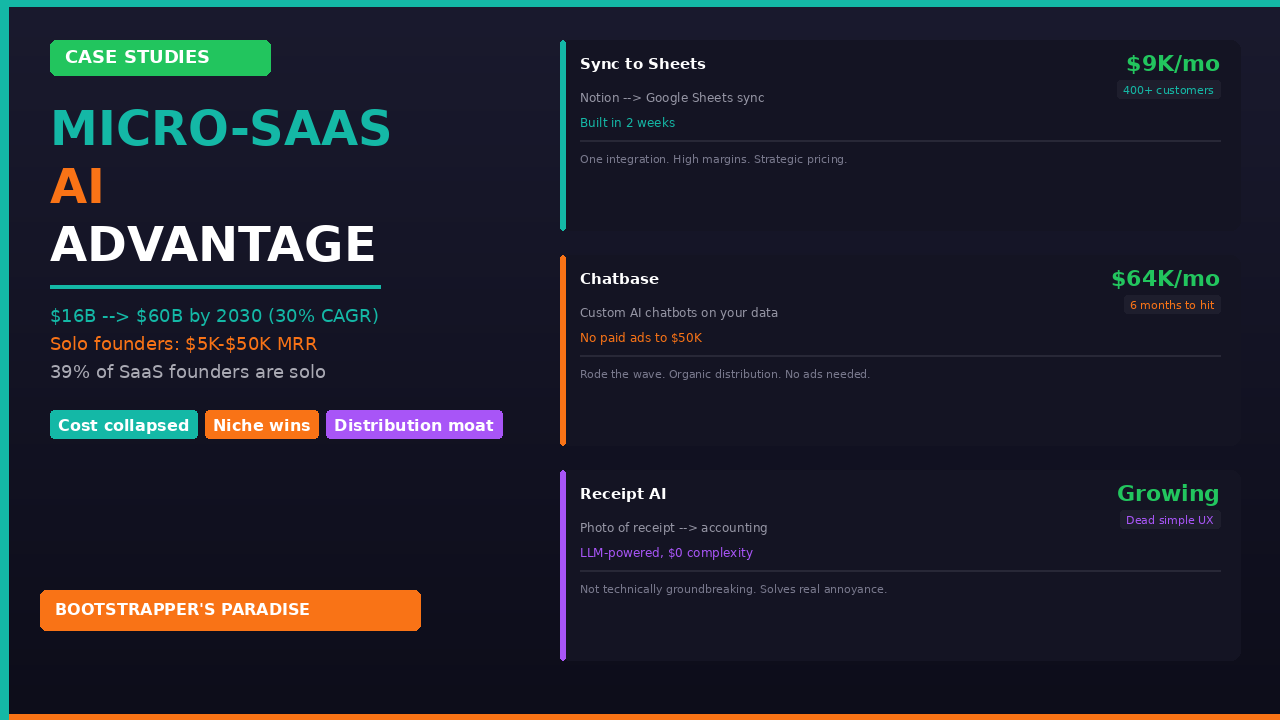
A freelance developer built a $9K/month SaaS in two weeks. The micro-SaaS segment is growing 30% annually and solo founders are hitting $5K-$50K MRR. Here are the three advantages driving it and a 5-step playbook to get started.
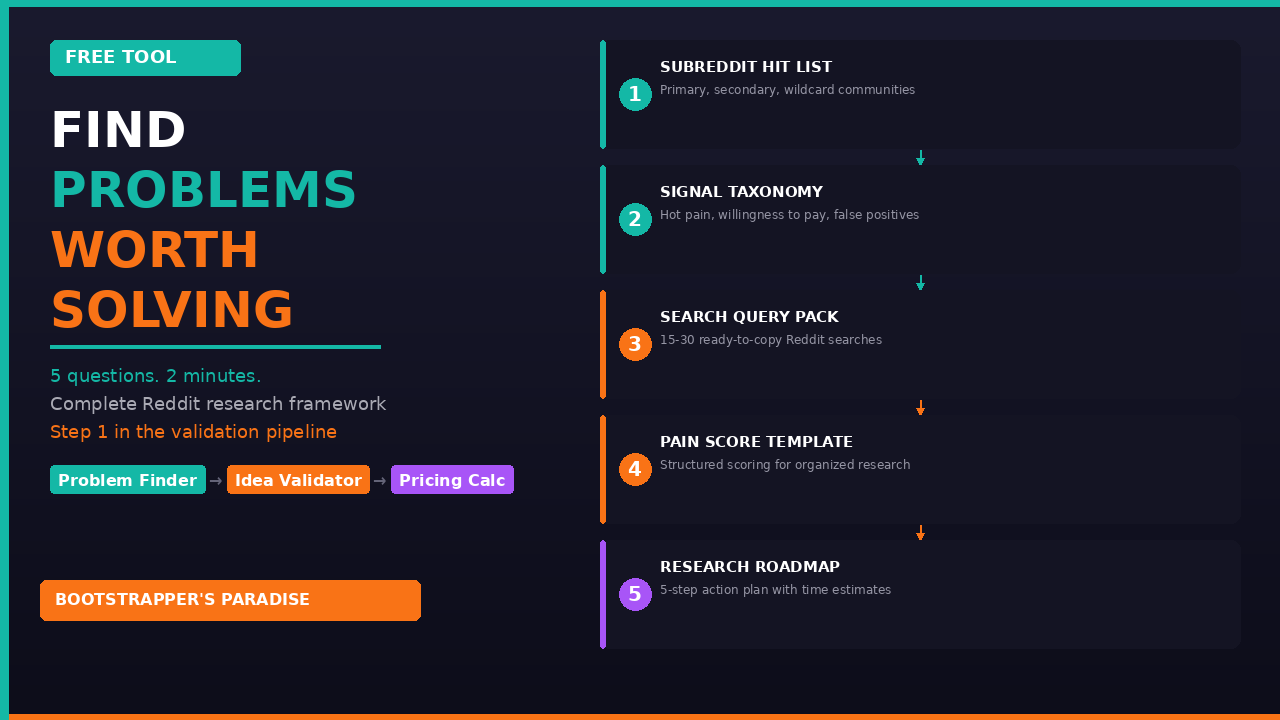
Most founders skip problem discovery and go straight to building. I built a free tool that generates a complete Reddit research framework for your market in 2 minutes — subreddit hit lists, search queries, signal taxonomy, and a research roadmap.
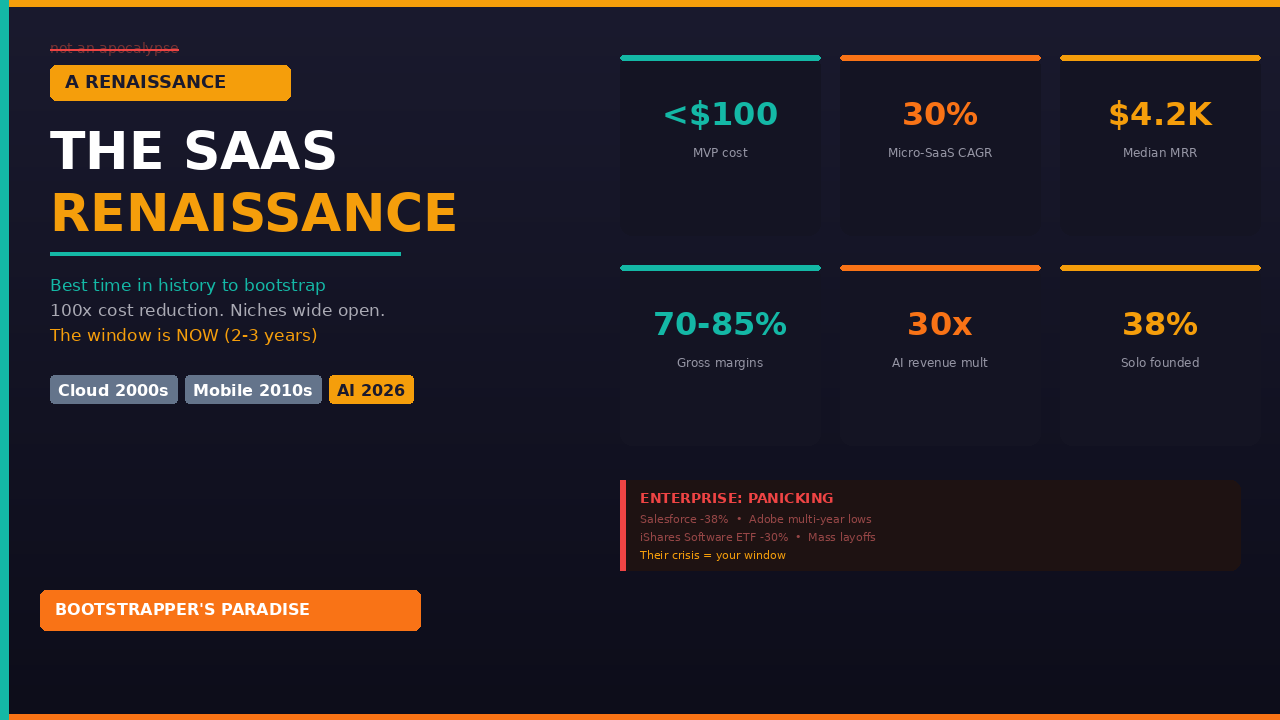
Everyone is calling it the SaaS Apocalypse. But if you are a bootstrapped founder, this is not an apocalypse — it is a renaissance. The cost to build has collapsed, the niches are wide open, and the incumbents are too distracted to compete.
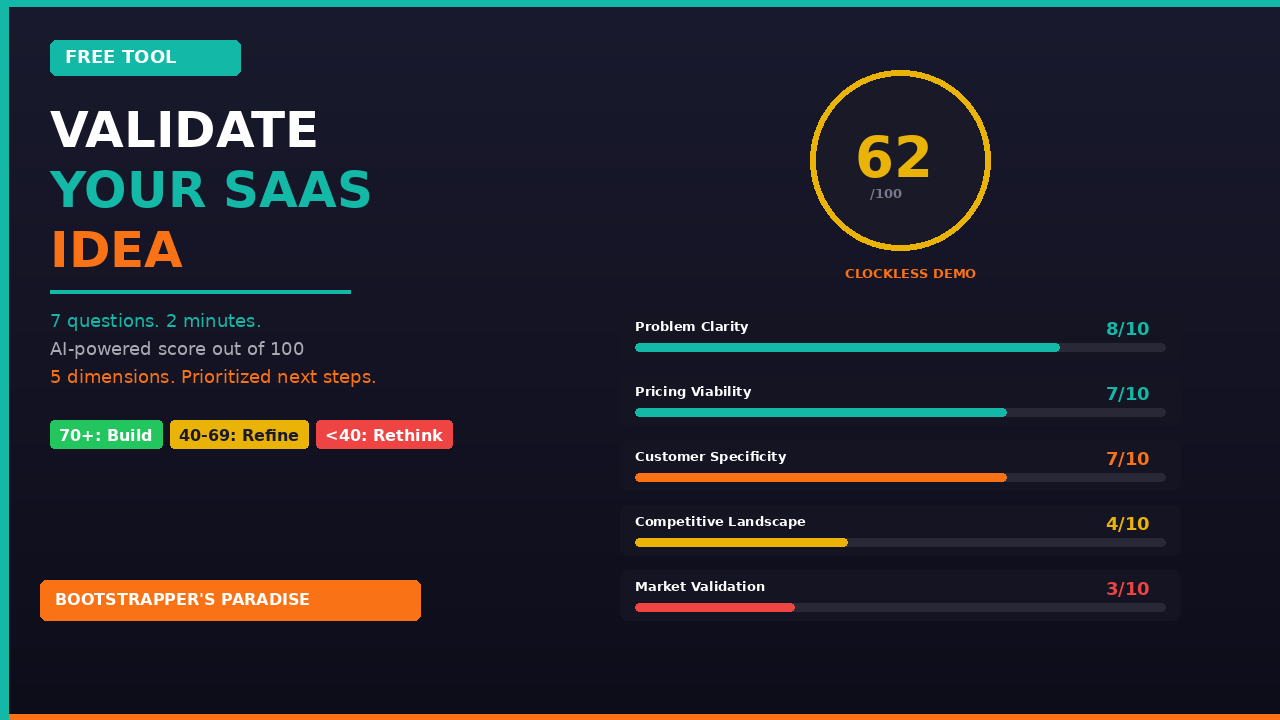
Most founders skip validation and build something nobody wants. I built a free tool that scores your idea in 2 minutes across 5 dimensions — and I ran my own product through it live.
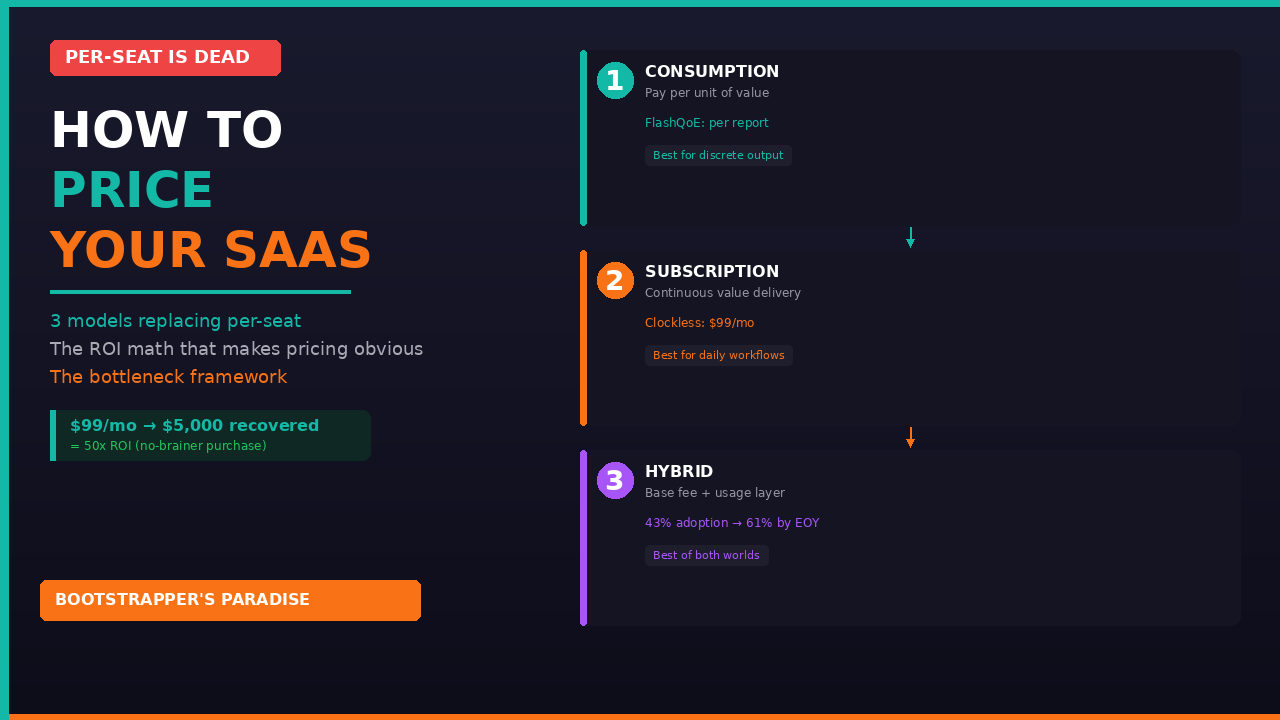
Per-seat pricing is dying. Here are the 3 models replacing it, the ROI math you need, and a 4-question framework to pick the right one.
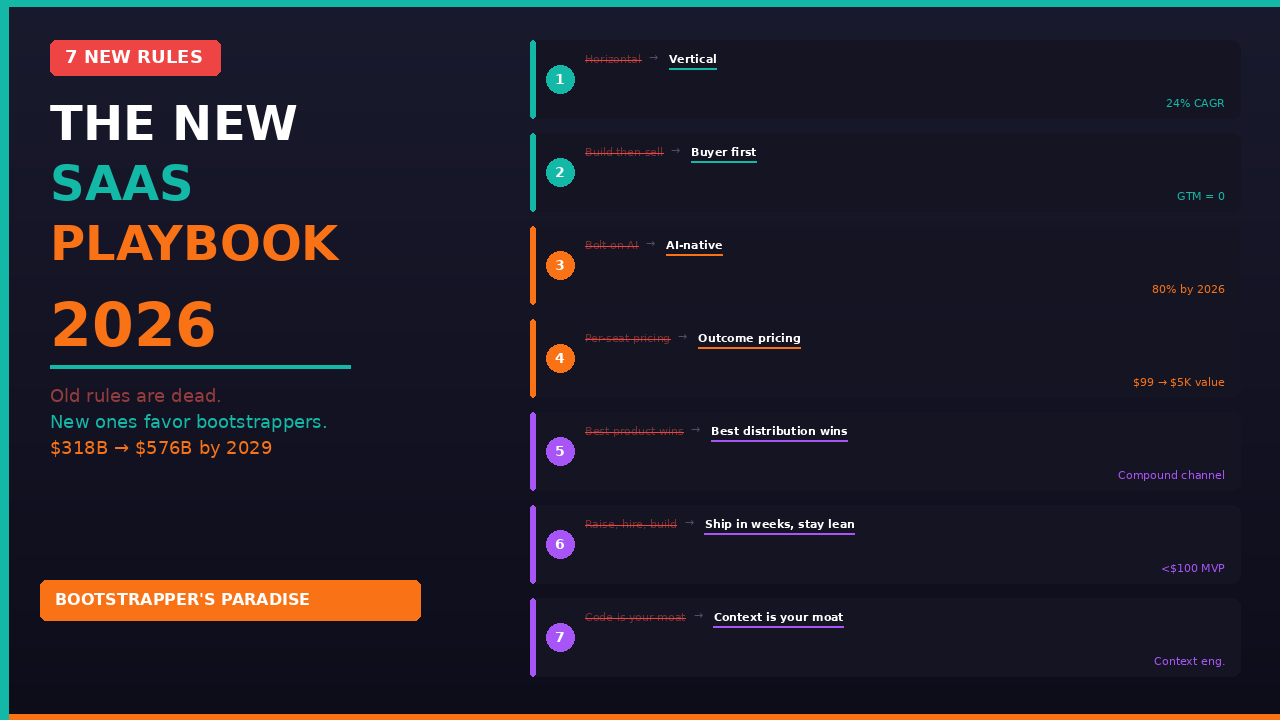
Every rule that defined SaaS for 20 years has changed. Here are the 7 new rules — and why every one favors bootstrapped founders.
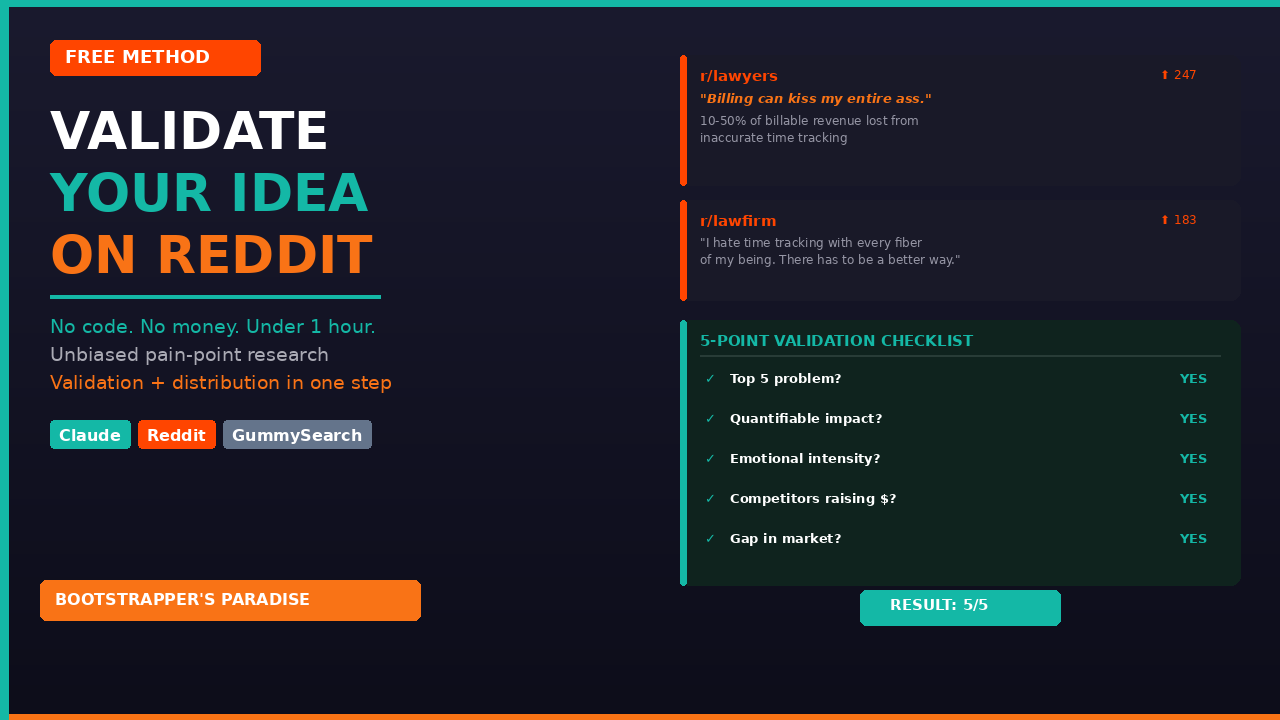
Before writing a single line of code, use Reddit to find out if your problem is real. Here's the exact unbiased research process and 5-question validation checklist.
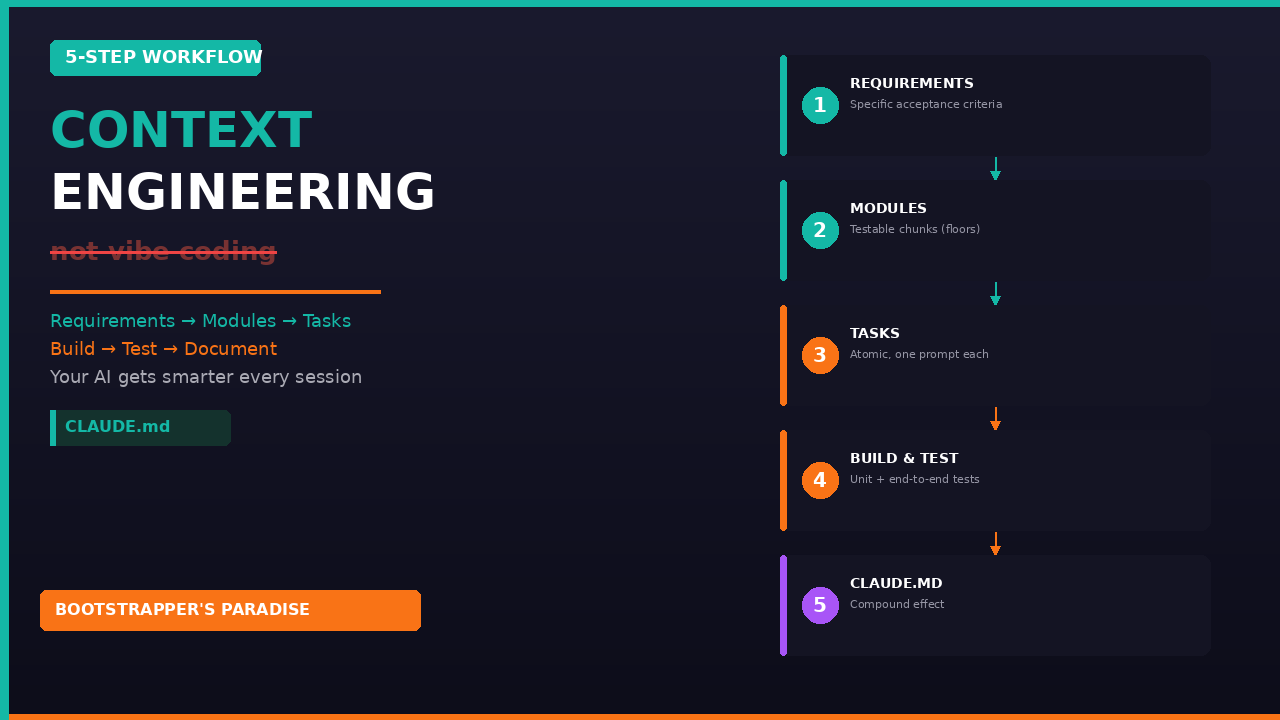
Vibe coding will bury you in tech debt within the week. Here's the structured 5-step context engineering workflow that turns AI from a loose cannon into a precision tool.
Before adding real functionality, we need to reorganize the project. Refactoring now — with a relatively small codebase — is dramatically easier than it will be later.
This is the day where building in public gets real. Not everything went according to plan — and that's exactly the point of showing the full process.
The transition from design tools to real engineering. Here's how to move from Lovable to GitHub to Cursor and set up for the technical build.
Walking through the prototype as a user, converting hours to revenue, and polishing until it's ready for real demos.
Today the landing page stops being a prototype and becomes a live marketing tool. Here's the polish process, domain setup, and launch strategy.
From solution design to interactive prototype in a single day. Here's how I used Claude and Lovable to build a demo-ready product experience.
With three days of research in hand, it's time to build a landing page before writing a single line of product code. Here's the Pain-Dream-Fix framework.
We know the problem is real and widespread. Now we map every competitor's strengths, weaknesses, and gaps to find our opening.
Having one person's pain is a start. Having an industry-wide pattern is a business. Here's how I used Claude to validate that billing problems are an industry-wide opportunity.
Everything starts with a conversation. Here's how I turned one customer interview into a structured foundation for a SaaS product using Claude and an AI notetaker.
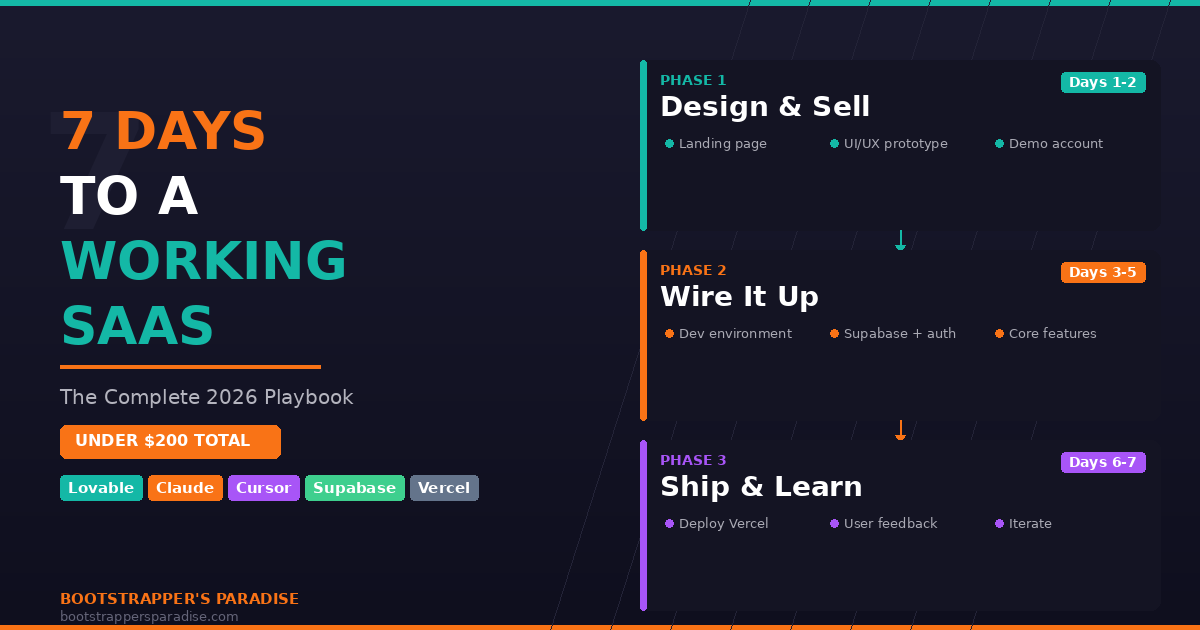
The exact step-by-step process to go from validated idea to working SaaS with real user feedback in one week — using Lovable, Claude Code, Cursor, Supabase, and Vercel.
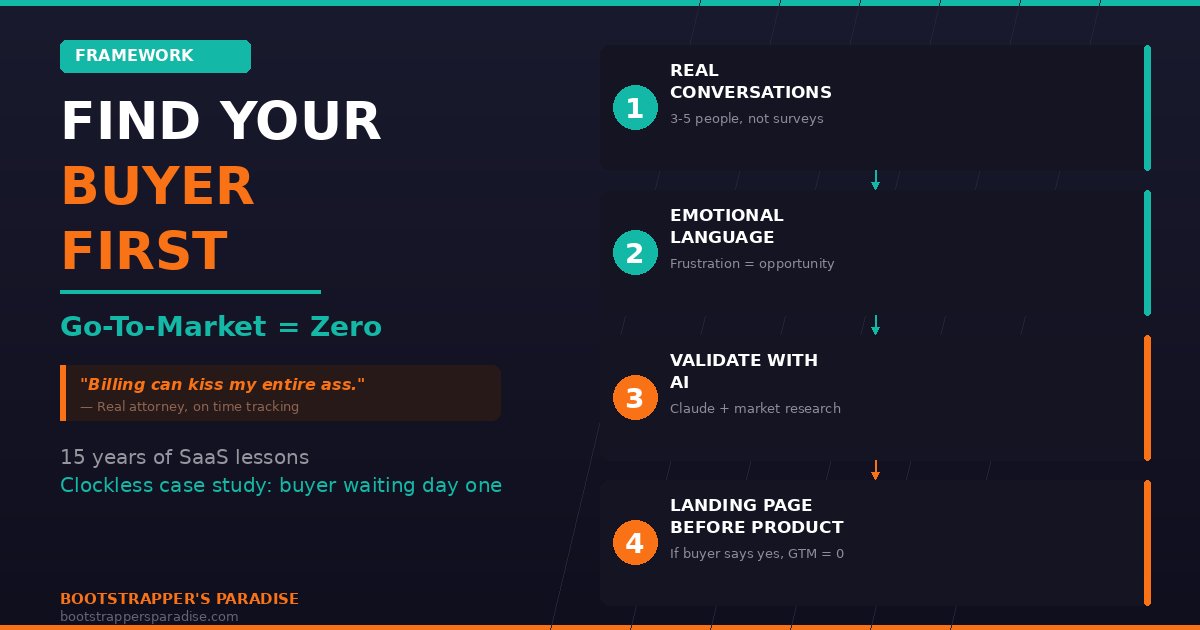
Most founders build first and sell later. Here's why finding your buyer before writing a single line of code collapses your go-to-market timeline to zero — and how I did it with Clockless.